

28 May 2026
Nordzucker 2025/2026 annual financial statements: consistent measures in an extremely challenging market environment
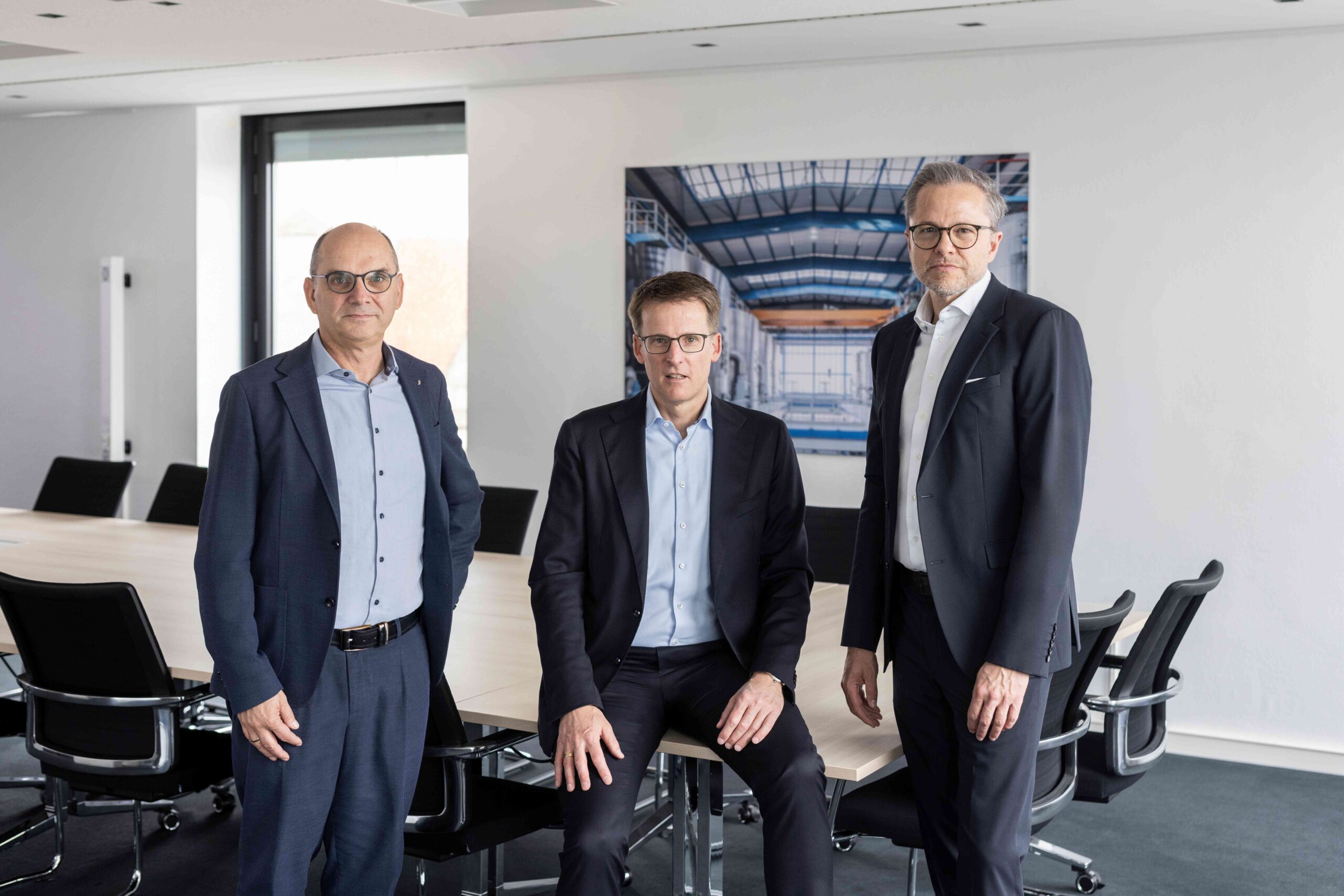
“The sugar industry is currently affected by an extremely challenging situation on the market. Two high-yield beet harvests in Europe have created a significant oversupply, which has put prices under enormous pressure,” explains Lars Gorissen, Chief Executive Officer (CEO) of Nordzucker AG, at the presentation of the annual financial statement in Braunschweig. “This market dynamic is part of our business but still highly unusual to this degree. What is vital is that we are actively taking countermeasures: with our strategy, the renewed revision of our excellence initiatives and an additional immediate contingency programme”.
Two particularly high-yield beet harvests and a structural decline in sugar consumption have contributed to high stocks in the EU sugar market. At the same time, lower world market prices due to high production volumes on the global market are continuing to exacerbate the price pressure.
In an average-length campaign, Nordzucker generated around 2.8 million tonnes of beet sugar – a little less than in the previous year. The processing output was at a high level overall, with the Australian subsidiary Mackay Sugar Ltd. generating around 0.6 million tonnes of raw sugar from sugar cane. Nordzucker Group revenues decreased in the 2025/2026 financial year to around 2.34 billion Euro (previous year: 2.77 billion Euro). This was primarily due to a much lower price level for sugar in Europe and on the global market. The net loss before minority interests amounted to minus 171.7 million Euro as against a net profit of plus 84.5 million Euro the previous year. The operating result (EBIT) came to minus 226 million (previous year: plus 100.5 million Euro) – including the recognition of non-recurring items in Europe of around minus 160 million Euro. The company has therefore recorded historically low net income.
Consequently, the Executive Board and the Supervisory Board will propose to the Annual General Meeting on 9 July 2026 that no dividend be distributed for the 2025/2026 financial year (previous year: 0.40 Euro per share).
Result development shaped by market dynamics
“The price decline that has characterised the market since autumn 2024 is fully impacting the result in the 2025/2026 financial year,” says Alexander Bott, Chief Financial Officer (CFO) at Nordzucker, reviewing the key figures from the past financial year. “The excellence initiatives and cost-cutting measures that we launched early on are now showing effects. However, we were not fully able to offset the negative market effects in the reporting year. Bott continues: “We started to roll out effective measures early on and are gradually implementing them. This will strengthen our resilience to volatile market developments in future”. As a result of the business model, however, the measures that have already been implemented will have a delayed effect on our earnings.
The negative result is primarily due to the European sugar business. In this business environment, the cane sugar business was able to contribute 0.3 million Euro to Group EBIT. Net income for the period came to plus1.5 million Euro. The activities implemented in recent years to optimise the business in Australia and improve profitability – particularly the availability of the plants – are continuing to pay off. The net assets and financial position of the Group continue to be robust, and the equity ratio remains at the high level of 55 per cent.
Package of measures strengthens cost structure and resilience
Given the market volatility, Nordzucker has further intensified existing excellence initiatives and also set up an additional immediate contingency programme. This focuses on reducing administrative expenses, including staff expenses and material costs, as well as adapting the network structure and boosting profitability, particularly in Germany.
“Waiting around is not an option in this market environment. That’s exactly why the structural measures introduced and a clear focus on costs are key here,” emphasises Alexander Godow. “We adapt our network in line with the changing market conditions and are strengthening our operational performance”. Structural adjustments have already been implemented in, amongst others, Finland and Slovakia. The aim is to develop a robust, more efficient and competitive production and logistics network that is better able to withstand challenges.
Nordzucker is implementing Group-wide excellence initiatives in order to optimise and strengthen its core beet business. An adapted beet price model has also been introduced in Germany, agreed in consultation with the growers, which allows us to respond more quickly and flexibly to the market situation. “Sugar production and beet cultivation can only work in tandem,” says Lars Gorissen. “The new beet price model in Germany is an important step and acts as a cue for other Nordzucker countries. It will strengthen beet cultivation in Europe to make it even more viable for the future”.
Decarbonisation also has an economic impact
Despite the current pressure on the results, Nordzucker is pushing ahead with the decarbonisation of production and investments in its factories – including in the context of rising requirements on the part of customers, society and legislation. Thus, Nordzucker invested around 160 million Euro in its European sites in the 2025/2026 financial year.
Furthermore, Nordzucker is implementing additional decarbonisation projects as a part of its own GoGreen programme: these include a new extraction tower in Schladen and the expansion of evaporation units in the Uelzen, Klein Wanzleben and Clauen sites. “We have invested significantly in decarbonisation in recent years. It’s now starting to pay off – both economically and in the lower carbon footprint of our products. As a result, we are able to improve our cost structure, reduce our dependence on volatile energy prices over the long term, and fulfil customer requirements,” says Godow.
Fields for Growth strategy sets the course
With its Fields for Growth strategy, Nordzucker is pursuing a clear course until 2033: to become a mature, diversified and profitable company. “Fields for Growth forms the framework for our future growth: the aim is to diversify our business and reduce our reliance on the European market whilst at the same time strengthening our market position in Europe as much as possible,” emphasises Lars Gorissen.
Nordzucker’s growth strategy is based on the expansion of the cane business, which is already contributing to Group results through the business in Australia and is more resilient in the market cycles. The intention to enter the growth market for alternative proteins and functional ingredients (Smart Ingredients) rounds off the growth and diversification strategy. Nordzucker continues to see great potential in this market. The strategy for entering the market is aimed at potential partnerships as well as investments.
Outlook: focus remains on returning to profitability
Nordzucker has once again reduced the area under cultivation in order to relieve the pressure on the market. The company therefore assumes that the balance between supply and demand will improve and expects to see a gradual recovery in the price with the new growing year.
Nordzucker expects that the measures to adjust the cost structure will gradually show results and is forecasting a negative EBIT in the mid tens of millions for the 2026/2027 financial year.
The company’s aim is to achieve a positive EBIT again in the 2027/2028 financial year – primarily resulting from the contributions from the excellence initiatives, the immediate contingency programme and with adjusted price and cost structures. “We have set the right course to return to profitability on our own. That gives us confidence for the journey ahead”.