

Nordzucker Post 3/2025 - 2 September 2025
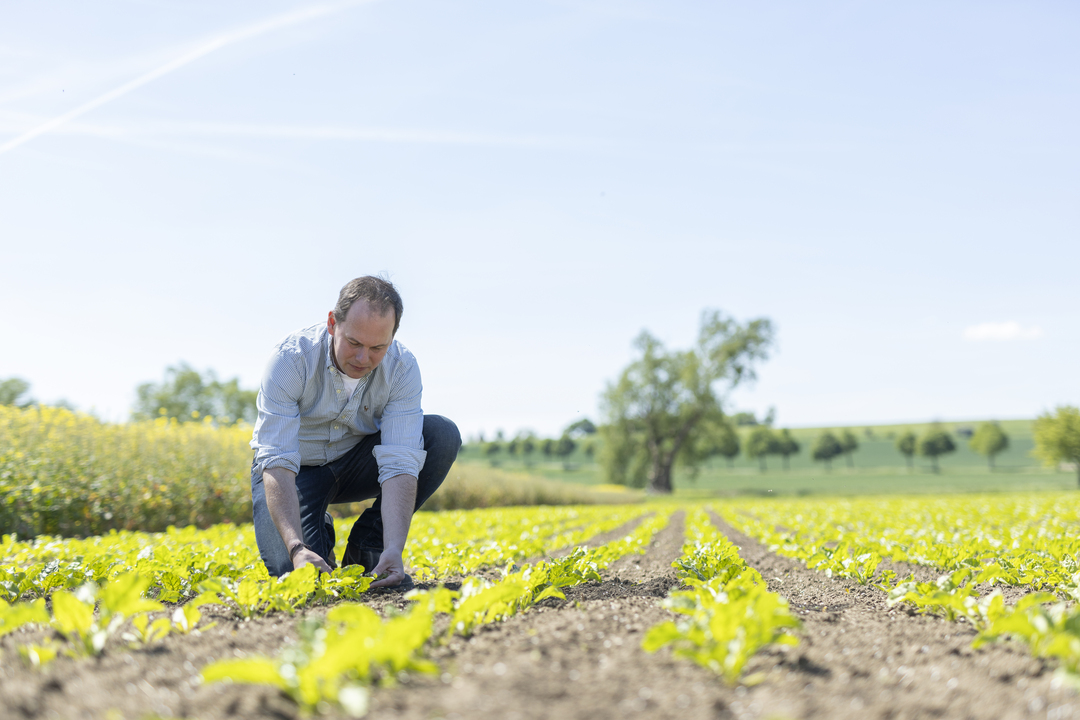
Sustainability begins in the field – CO₂ reduction in sugar beet cultivation
Decarbonisation is a central element of Nordzucker’s Fields for Growth strategy. The aim is to significantly reduce CO₂ emissions along the entire value chain – from the field to the customer. As part of the Science Based Targets initiative (SBTi), Nordzucker has committed to reducing direct emissions in production by 50 per cent by 2030 compared to the base year 2018. In addition, the so-called FLAG targets (Forest, Land, Agriculture) apply to agriculture and land use, which envisage a 36 per cent reduction by 2030. These decarbonisation targets are important to respond to the changed framework conditions and to meet changing expectations, especially those of customers.
Emissions in focus: Where they arise
Around one third of global greenhouse gas emissions are caused by agriculture, land use and forestry. In sugar beet cultivation, the main drivers of CO₂ emissions are the production and use of fertilisers and the use of fossil fuels. Efficient use of these inputs is therefore crucial to reducing or avoiding emissions.
Pilot projects for CO₂ reduction in cultivation
To further reduce the carbon footprint of sugar beet, Nordzucker is addressing these issues by working closely with farmers, input manufacturers, research institutions and other partners.
The first pilot projects to test suitable measures have already been launched:
- CO₂-reduced nitrogen fertiliser from Yara
In cooperation with Yara Germany, we are testing the mineral nitrogen fertiliser Yara Climate Choice, which is produced using renewable energies. It is being used in Germany, Poland and Denmark.
- CO₂-reduced potash fertiliser from K+S
The fertiliser Korn-KALI C:LIGHT, distributed by Agravis, offers a CO2-reduced alternative to conventional potash fertilisers. Here, too, production is based on renewable energies. The fertiliser is currently being used in Germany.
- Diesel substitute from hydrogenated vegetable oils (HVO100)
From the 2025 campaign onwards, fuel from hydrogenated vegetable oils will be used in individual harvest vehicles in Germany.
Further measures such as intercropping, conservation tillage and the optimisation of beet varieties are in the planning stage and are being developed in collaboration with agricultural partners.
Thinking ahead together
“CO₂ reduction is not only a political and social necessity – it is also crucial for our competitiveness and for the trust of our customers. Transparency about our measures and progress is key,” emphasises Björn Kiepe, Head of Agri Consulting & Shared Agri Services. He adds: “Practical solutions are needed to reduce the carbon footprint of sugar beet cultivation. How we shape this path is in our hands – together with our growers.”
Sugar beet cultivation is an integral part of crop rotation and is of great regional importance. Step by step, the carbon footprint of sugar beet can be reduced with the presented measures, and cultivation can be made more demand-oriented and thus more sustainable.
